Barn owl vs great horned owl: how their vision differs
Two animals people expect to see alike, or very differently. Here are their values side by side, from the same catalogue and with the same evidence labels.
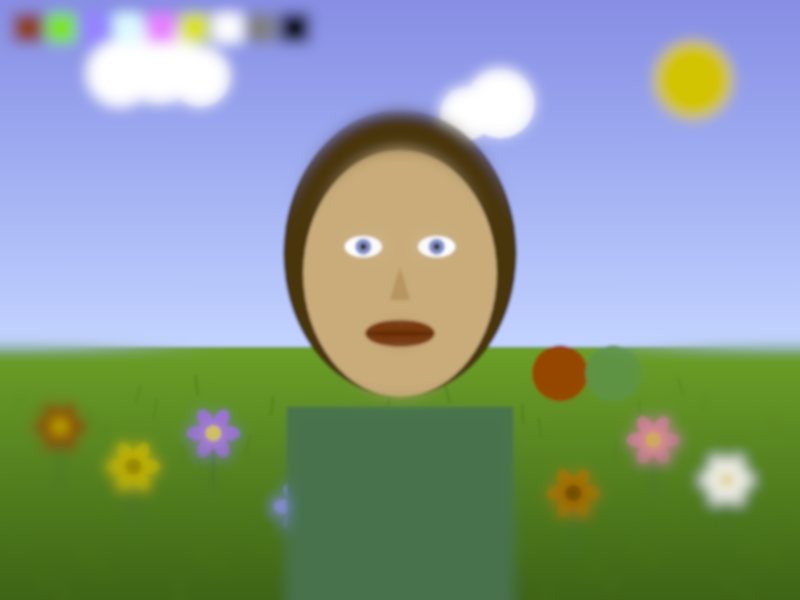
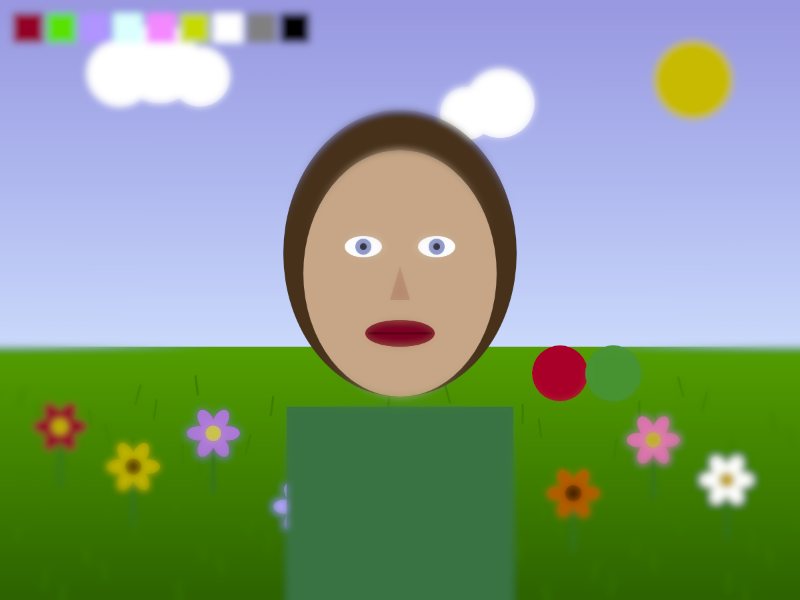
The differences in numbers
- The barn owl has 3 colour receptor classes and the great horned owl 4.
- The great horned owl resolves finer detail: 7.125 vs 3.3 cycles per degree, about 2.2 times finer.
- Flicker fusion: 50 Hz for the barn owl, 40 Hz for the great horned owl. The higher value sees fast motion in finer time steps.
- Binocular overlap: 36° vs 41°.
Dial by dial
| Dial | Barn owl | Great horned owl |
|---|---|---|
| Colour | Colour receptors: 4 receptor classes: 373 nm (UVS), 454 nm (SWS (blue)), 504 nm (MWS (green)), 555 nm (LWS (long)) Measured[3][1][2] Ultraviolet: yes: at least one receptor peaks in the ultraviolet Measured | |
| Sharpness | ||
| Field of view | Binocular overlap: 36° Measured[7] Total field of view: 201° Group default[8] Blind area behind the head: 159° Group default[8] Eye placement: lateral Derived[7] | Binocular overlap: 41° Measured[7] Total field of view: 201° Estimated[8] Blind area behind the head: 159° Estimated[8] Eye placement: lateral Derived[7] |
| Sharp zones (foveas) | Number of foveas: 1 Measured (not re-verified)[9] Fovea type: temporal Measured (not re-verified)[9] | |
| Night vision | Reflective layer (tapetum): no Measured (not re-verified)[20] | Reflective layer (tapetum): no Measured (not re-verified)[21] |
| Motion (flicker fusion) | Flicker fusion frequency: 40 Hz Measured[23] |
Vision types: Barn owl: Owl and night bird. Great horned owl: Owl and night bird.
More comparisons: all comparisons.
Sources
- Longcore T. 2023. A compendium of photopigment peak sensitivities and visual spectral response curves of terrestrial wildlife to guide design of outdoor nighttime lighting. Basic Appl Ecol 73:40-50. doi:10.1016/j.baae.2023.09.002. doi.org/10.5281/zenodo.8432720
- VPOD in-vivo (MSP / single-cell) lambda max compendium, file scp_cleaned.csv, VPOD GitHub (Frazer et al. 2025 bioRxiv 10.1101/2025.08.22.671864). github.com/VisualPhysiologyDB/visual-physiology-opsin-db/tree/main/scripts_n_notebooks/vpod_ML_workflows/mine_n_match/data_sources/lmax/vpod
- Lind O, Mitkus M, Olsson P, Kelber A. 2014. Ultraviolet vision in birds: the importance of transparent eye media. Proc R Soc B 281:20132209. Table 1. doi.org/10.1098/rspb.2013.2209
- Caves EM, Brandley NC, Johnsen S (2018) Visual acuity and the evolution of signals. Trends Ecol Evol 33:358-372. Supplementary Tables S1-S3.. doi.org/10.1016/j.tree.2018.03.001
- Caves EM, Fernandez-Juricic E, Kelley LA (2024) Ecological and morphological correlates of visual acuity in birds. J Exp Biol 227(2): jeb246063. Supplementary Table S1.. doi.org/10.1242/jeb.246063
- Potier S, Mitkus M, Kelber A (2020) Visual adaptations of diurnal and nocturnal raptors. Semin Cell Dev Biol 106:156-164. Table 1.. doi.org/10.1016/j.semcdb.2020.05.004
- Potier S, Roulin A, Martin GR, Portugal SJ, Bonhomme V, Bouchet T, de Romans R, Meyrier E, Kelber A. 2023. Binocular field configuration in owls: the role of foraging ecology. Proc R Soc B 290: 20230664. Data figshare.. doi.org/10.1098/rspb.2023.0664
- species_v1:Martin 1984
- species_v1:Harmening et al. 2009
- Moore BA, Tyrrell LP, Pita D, Bininda-Emonds ORP, Fernandez-Juricic E 2017. Does retinal configuration make the head and eyes of foveate birds move? Sci Rep 7: 38406. Appendix 1.. doi.org/10.1038/srep38406
- Potier S, Mitkus M, Bonadonna F, Duriez O, Isard P-F, Dulaurent T, Mentek M, Kelber A 2017. Eye size, fovea, and foraging ecology in accipitriform raptors. Brain Behav Evol 90: 232-242. Supplementary material (Tables S1, S2).. doi.org/10.1159/000479783
- Rodrigues T, Matter MM, Chiodini A, et al. 2026. Foveal vision in fast-flying birds hunting on the wing. bioRxiv 2026.06.05.730304. doi.org/10.64898/2026.06.05.730304
- Anderson SR, Wiens JJ. 2017. Out of the dark: 350 million years of conservatism and evolution in diel activity patterns in vertebrates. Evolution 71:1944-1959. Dryad doi:10.5061/dryad.fg700. doi.org/10.5061/dryad.fg700
- Angielczyk KD, Schmitz L 2014. Nocturnality in synapsids predates the origin of mammals by over 100 million years. Proc R Soc B 281: 20141642. Dryad doi:10.5061/dryad.1v8kj.. doi.org/10.1098/rspb.2014.1642
- Light conditions and the evolution of the visual system in birds (figshare dataset, SupplementaryDataset1). doi.org/10.6084/m9.figshare.22116371.v3
- Choiniere JN, Neenan JM, Schmitz L, Ford DP, Chapelle KEJ, Balanoff AM, Sipla JS, Georgi JA, Walsh SA, Norell MA, Xu X, Clark JM, Benson RBJ. 2021. Evolution of vision and hearing modalities in theropod dinosaurs. Science 372:610-613. doi:10.1126/science.abe7941. Data: https://osf.io/teq73/. doi.org/10.1126/science.abe7941
- Wilman H, Belmaker J, Simpson J, de la Rosa C, Rivadeneira MM, Jetz W. 2014. EltonTraits 1.0: species-level foraging attributes of the world's birds and mammals. Ecology 95:2027. BirdFuncDat.txt. doi.org/10.6084/m9.figshare.3559887.v1
- Schmitz & Motani 2011. Nocturnality in dinosaurs inferred from scleral ring and orbit morphology. Science 332:705. Comparative data redeposited in Xing et al. 2020 supplementary information (Zenodo).. doi.org/10.5281/zenodo.3591994
- Moura et al. 2024. A phylogeny-informed characterisation of global tetrapod traits addresses data gaps and biases. PLoS Biol 22:e3002658. TetrapodTraits v3.0.1.. doi.org/10.5281/zenodo.22536349
- species_v1:Standard textbook knowledge
- species_v1:Healy et al. 2013
- Healy K, McNally L, Ruxton GD, Cooper N, Jackson AL. 2013. Metabolic rate and body size are linked with perception of temporal information. Animal Behaviour 86:685-696. Table 1. doi.org/10.1016/j.anbehav.2013.06.018
- Lafitte A, Sordello R, Legrand M, Nicolas V, Obein G, Reyjol Y. 2022. A flashing light may not be that flashy: A systematic review on critical fusion frequencies. PLoS ONE 17(12): e0279718. S10 File (CFF database). doi.org/10.1371/journal.pone.0279718
Renders use the sample scene at a 60° field of view in daylight. Evidence levels: how the tiers work.