Bottlenose dolphin vs harbour seal: how their vision differs
Two animals people expect to see alike, or very differently. Here are their values side by side, from the same catalogue and with the same evidence labels.
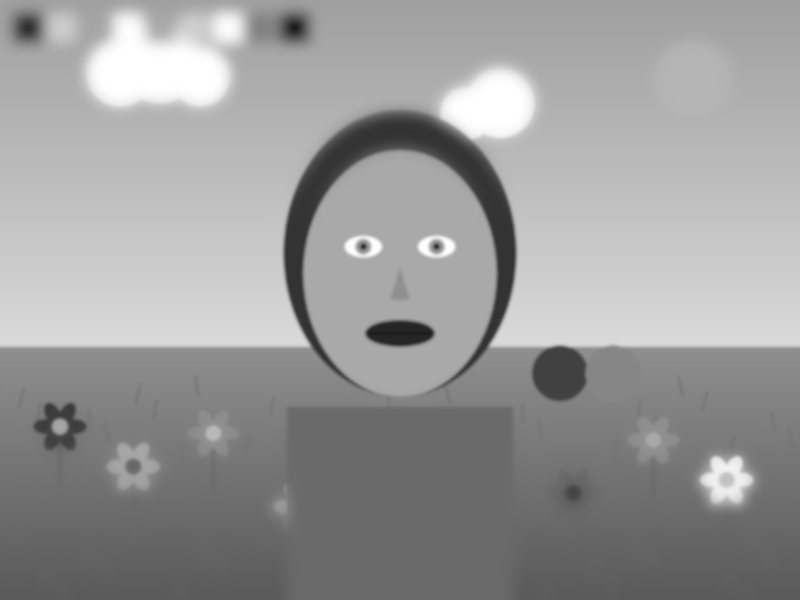
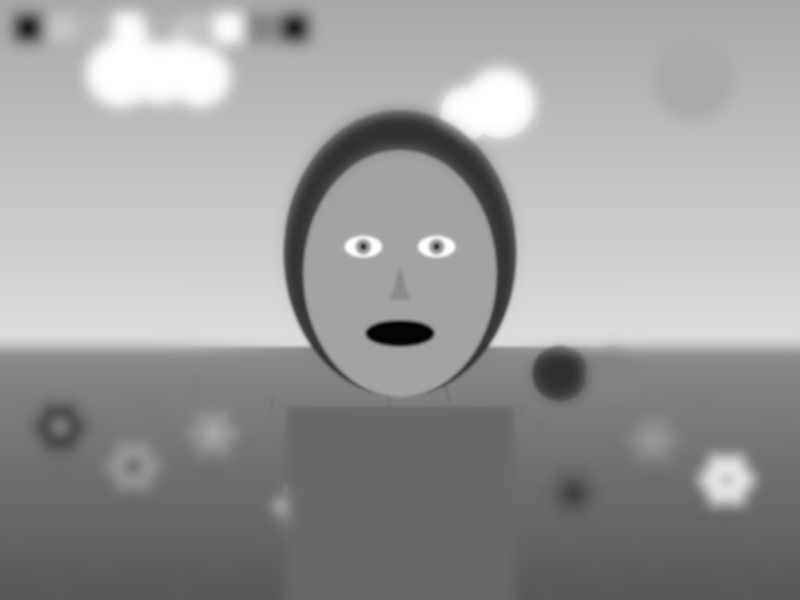
The differences in numbers
- Both have 1 colour receptor classes in this dataset, so any difference in the renders comes from the other dials and the receptor peaks.
- The harbour seal resolves finer detail: 3.6 vs 3.4 cycles per degree, about 1.1 times finer.
- Flicker fusion: 60 Hz for the bottlenose dolphin, 22.5 Hz for the harbour seal. The higher value sees fast motion in finer time steps.
- Binocular overlap: 75° vs 88.5°.
Dial by dial
| Dial | Bottlenose dolphin | Harbour seal |
|---|---|---|
| Colour | Colour receptors: 1 receptor class: 524 nm (MWS (green)) Measured[1] | Colour receptors: 1 receptor class: 510.2 nm (MWS (green)) Measured (not re-verified)[2] |
| Sharpness | Acuity: 3.6 cycles per degree Measured[4] | |
| Field of view | Total field of view: 250° Group default[9] | |
| Sharp zones (foveas) | Number of foveas: 0 Measured[10] Fovea type: area centralis, horizontal streak Measured[10] | Number of foveas: 0 Estimated[10] Fovea type: area centralis Estimated[10] |
| Night vision | Reflective layer (tapetum): yes Measured (not re-verified)[18] | |
| Motion (flicker fusion) | Flicker fusion frequency: 22.5 Hz Estimated[23] |
Vision types: Bottlenose dolphin: Marine mammal cone monochromat. Harbour seal: Marine mammal cone monochromat.
More comparisons: all comparisons.
Sources
- Frazer SA, Baghalian M, et al. 2024. Discovering genotype-phenotype relationships with machine learning and the Visual Physiology Opsin Database (VPOD). GigaScience 13:giae073; VPOD v1.3 data release. doi.org/10.5281/zenodo.19051998
- Murphy MJ, Westerman EL. 2022. Evolutionary history limits species' ability to match colour sensitivity to available habitat light. Proc R Soc B 289:20220612. Electronic supplementary Table S1. doi.org/10.1098/rspb.2022.0612
- Caves EM, Fernandez-Juricic E, Kelley LA (2024) Ecological and morphological correlates of visual acuity in birds. J Exp Biol 227(2): jeb246063. Supplementary Table S1.. doi.org/10.1242/jeb.246063
- Kirk EC, Kay RF 2004. The evolution of high visual acuity in the Anthropoidea. In Anthropoid Origins, Table 1 (behavioural acuity). doi.org/10.1007/978-1-4419-8873-7_20
- Heesy CP 2004. On the relationship between orbit orientation and binocular visual field overlap in mammals. Anat Rec 281A:1104, Table 1. doi.org/10.1002/ar.a.20116
- Heffner RS, Heffner HE 1992. Visual factors in sound localization in mammals. J Comp Neurol 317:219, Table 1 (via Evo-M1 sensory merge). doi.org/10.1002/cne.903170302
- Vega-Zuniga T, Medina FS, Fredes F, et al. 2013. Does nocturnality drive binocular vision? Octodontine rodents as a case study. PLoS ONE 8: e84199.. doi.org/10.1371/journal.pone.0084199
- Vega-Zuniga T, Medina FS, Marín G, Letelier JC, Palacios AG, Němec P, Schleich CE, Mpodozis J. (2017). Selective binocular vision loss in two subterranean caviomorph rodents: Spalacopus cyanus and Ctenomys talarum. Scientific reports
- species_v1:Miller & Murphy 1995
- Kopania EEK, Clark NL. 2025. Mammalian retinal specializations for high acuity vision evolve in response to both foraging strategies and morphological constraints. Evolution Letters 9: qrae072. Supplementary Tables S1-S2.. doi.org/10.1093/evlett/qrae072
- Anderson SR, Wiens JJ. 2017. Out of the dark: 350 million years of conservatism and evolution in diel activity patterns in vertebrates. Evolution 71:1944-1959. Dryad doi:10.5061/dryad.fg700. doi.org/10.5061/dryad.fg700
- Borges R, Johnson WE, O'Brien SJ, Gomes C, Heesy CP, Antunes A (2018) Adaptive genomic evolution of opsins reveals that early mammals flourished in nocturnal environments. BMC Genomics 19:121
- Wilman et al. 2014 EltonTraits 1.0, MamFuncDat.txt. doi.org/10.6084/m9.figshare.3559887.v1
- Schmitz L, Motani R. 2011. Science 332:705-708, SOM. doi.org/10.1126/science.1200043
- Moura et al. 2024. A phylogeny-informed characterisation of global tetrapod traits addresses data gaps and biases. PLoS Biol 22:e3002658. TetrapodTraits v3.0.1.. doi.org/10.5281/zenodo.22536349
- Banks MS, Sprague WW, Schmoll J, Parnell JAQ, Love GD. 2015. Science Advances 1:e1500391. doi.org/10.1126/sciadv.1500391
- Cervino NG et al. 2021. A closer look at pupil diversity and evolution in frogs and toads. Proc R Soc B 288:20211402. doi.org/10.6084/m9.figshare.15112050.v1
- species_v1:Standard textbook knowledge
- Maor R, Dayan T, Ferguson-Gow H, Jones KE. 2017. Temporal niche expansion in mammals from a nocturnal ancestor after dinosaur extinction. Nature Ecology & Evolution 1:1889-1895. Supplementary Table 1. doi.org/10.1038/s41559-017-0366-5
- Jones KE et al. 2009. PanTHERIA: a species-level database of life history, ecology, and geography of extant and recently extinct mammals. Ecology 90:2648. Ecological Archives E090-184. doi.org/10.1890/08-1494.1
- Haarlem CS, Hynes C, Jackson AL, Mitchell KJ, O'Connell RG, Healy K. 2026. Pace of ecology drives the tempo of visual perception across the animal kingdom. Nature Ecology & Evolution (doi:10.1038/s41559-026-02994-7). Figshare dataset 10.6084/m9.figshare.30556475. doi.org/10.6084/m9.figshare.30556475
- Healy K, McNally L, Ruxton GD, Cooper N, Jackson AL. 2013. Metabolic rate and body size are linked with perception of temporal information. Animal Behaviour 86:685-696. Table 1. doi.org/10.1016/j.anbehav.2013.06.018
- Inger R, Bennie J, Davies TW, Gaston KJ. 2014. Potential biological and ecological effects of flickering artificial light. PLoS ONE 9(5): e98631. Table 3. doi.org/10.1371/journal.pone.0098631
- Lafitte A, Sordello R, Legrand M, Nicolas V, Obein G, Reyjol Y. 2022. A flashing light may not be that flashy: A systematic review on critical fusion frequencies. PLoS ONE 17(12): e0279718. S10 File (CFF database). doi.org/10.1371/journal.pone.0279718
Renders use the sample scene at a 60° field of view in daylight. Evidence levels: how the tiers work.