How does the mourning dove see?
The mourning dove (Zenaida macroura) is a bird in the order Columbiformes. Its eyes belong to the vision type Panoramic grain-eater and wader: 4 cones (violet-sensitive), low-moderate acuity, ~300-360 deg field, small binocular zone.
Measured in this species: sharpness, field of view, foveas and night vision. Measured core: measured values on at least 3 of the 6 dials. Every value below carries its evidence level and sources; nothing is typed by hand.
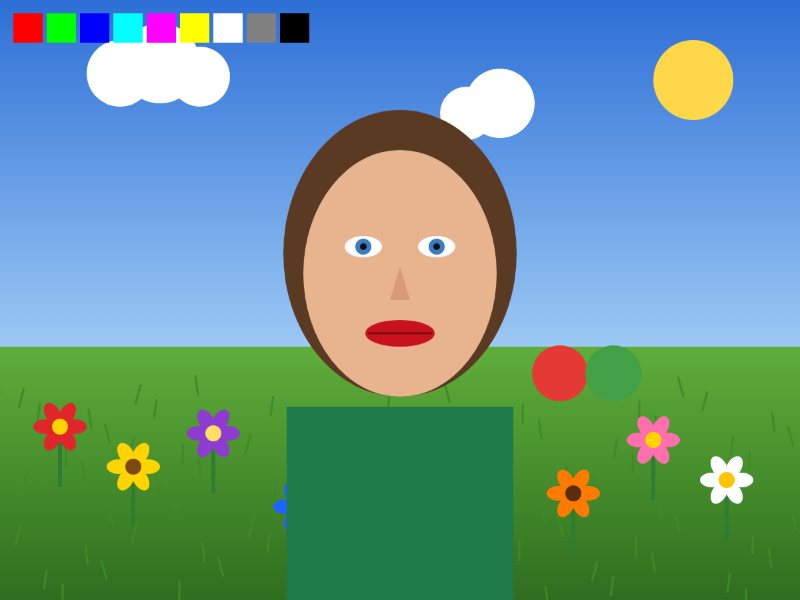
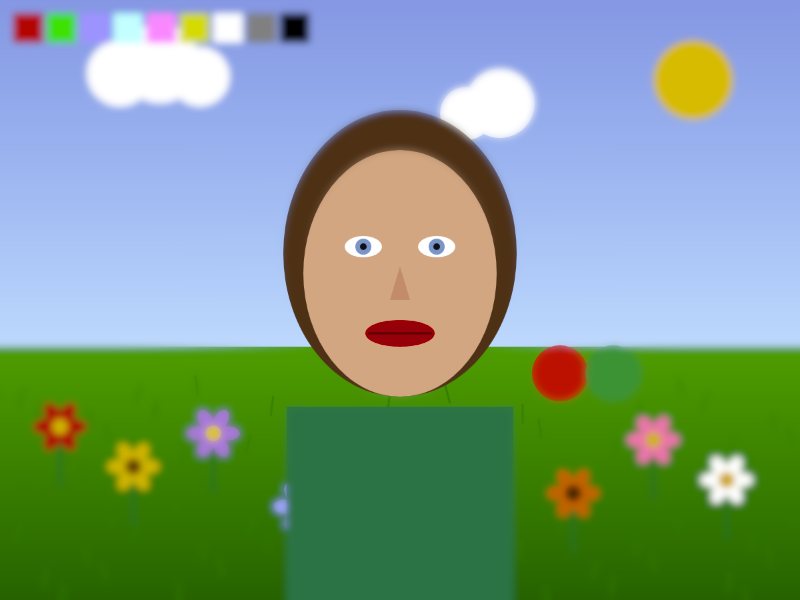
What stands out
- It has 4 colour receptor classes; people have 3.
- Its sharpest vision resolves 6.89 cycles per degree: the finest stripe pattern it can tell apart from grey.
- Its eyes cover about 316° around the head, with 9° seen by both eyes at once.
- It stops seeing flicker at 88.5 Hz, against 60 Hz for people in this dataset, so fast motion looks about 1.5 times slower to it.[10][12]
- Activity pattern: diurnal.
The six dials
Evidence levels: how the tiers work. "Measured" means a value measured in this species; "Estimated" values come from a close relative or an eye-size formula.
| Dial | Value | Evidence | Sources |
|---|---|---|---|
| Colour | Colour receptors 4 receptor classes: 406.5 nm (VS/SWS (violet)), 453 nm (SWS (blue)), 507 nm (MWS (green)), 567 nm (LWS (long)) receptor set of nearest measured relative Columba livia (same family Columbidae) | Estimated | [1][2] |
| Sharpness | Acuity 6.89 cycles per degree median of 1 anatomical-ganglion rows (method priority rule) | Measured | [3] |
| Field of view | Binocular overlap 9° median of 1 rows (eyes-at-rest rows preferred) | Measured | [4] |
| Total field of view 316° median species-v1 total field of family Columbidae: Columba livia | Estimated | [5] | |
| Blind area behind the head 44° | Estimated | [5] | |
| Eye placement lateral frontal if binocular overlap >= 60 deg, else lateral | Derived | [4] | |
| Sharp zones (foveas) | Number of foveas 1 retinal topography | Measured (not re-verified) | [6] |
| Fovea type single central fovea (displaced dorso-temporally from retinal centre) | Measured (not re-verified) | [6] | |
| Night vision | Activity pattern diurnal mode of 3 rows (of 3 rows): diurnal; not_nocturnal; photopic | Measured (not re-verified) | [7][8][9] |
| Rods vs cones cone-dominated nocturnal -> rod-dominated; crepuscular / cathemeral / mixed -> mixed; diurnal -> cone-dominated | Derived | [7][8][9] | |
| Motion (flicker fusion) | Flicker fusion frequency 88.5 Hz median of 1 relatives in family Columbidae: Columba livia | Estimated | [10][11] |
Other senses
- magnetoreception: NOT RENDERED (no agreed visual percept) (Group default)
Related animals
- Rock pigeon same vision type
- Chicken same vision type
- Canada goose same vision type
- Common ostrich same vision type
- Mallard same vision type
- Manx shearwater same vision type
More birds: all birds with measured vision data.
Sources
- Lind O, Mitkus M, Olsson P, Kelber A. 2014. Ultraviolet vision in birds: the importance of transparent eye media. Proc R Soc B 281:20132209. Table 1. doi.org/10.1098/rspb.2013.2209
- Longcore T. 2023. A compendium of photopigment peak sensitivities and visual spectral response curves of terrestrial wildlife to guide design of outdoor nighttime lighting. Basic Appl Ecol 73:40-50. doi:10.1016/j.baae.2023.09.002. doi.org/10.5281/zenodo.8432720
- Caves EM, Brandley NC, Johnsen S (2018) Visual acuity and the evolution of signals. Trends Ecol Evol 33:358-372. Supplementary Tables S1-S3.. doi.org/10.1016/j.tree.2018.03.001
- Tyrrell LP, Fernandez-Juricic E 2017. Avian binocular vision: it's not just about what birds can see, it's also about what they can't. PLoS ONE 12(3): e0173235. S1 Table.. doi.org/10.1371/journal.pone.0173235
- species_v1:Martin & Young 1983
- Moore BA, Tyrrell LP, Pita D, Bininda-Emonds ORP, Fernandez-Juricic E 2017. Does retinal configuration make the head and eyes of foveate birds move? Sci Rep 7: 38406. Appendix 1.. doi.org/10.1038/srep38406
- Wilman H, Belmaker J, Simpson J, de la Rosa C, Rivadeneira MM, Jetz W. 2014. EltonTraits 1.0: species-level foraging attributes of the world's birds and mammals. Ecology 95:2027. BirdFuncDat.txt. doi.org/10.6084/m9.figshare.3559887.v1
- Schmitz L, Motani R. 2011. Science 332:705-708, SOM. doi.org/10.1126/science.1200043
- Moura et al. 2024. A phylogeny-informed characterisation of global tetrapod traits addresses data gaps and biases. PLoS Biol 22:e3002658. TetrapodTraits v3.0.1.. doi.org/10.5281/zenodo.22536349
- Healy K, McNally L, Ruxton GD, Cooper N, Jackson AL. 2013. Metabolic rate and body size are linked with perception of temporal information. Animal Behaviour 86:685-696. Table 1. doi.org/10.1016/j.anbehav.2013.06.018
- Lafitte A, Sordello R, Legrand M, Nicolas V, Obein G, Reyjol Y. 2022. A flashing light may not be that flashy: A systematic review on critical fusion frequencies. PLoS ONE 17(12): e0279718. S10 File (CFF database). doi.org/10.1371/journal.pone.0279718
- Inger R, Bennie J, Davies TW, Gaston KJ. 2014. Potential biological and ecological effects of flickering artificial light. PLoS ONE 9(5): e98631. Table 3. doi.org/10.1371/journal.pone.0098631
Every value cites its sources (all sources). Data: catalogue-v1, built 2026-09-29. Accuracy notes: how accurate is this?