World Bee Day: see a garden through a bee's eyes
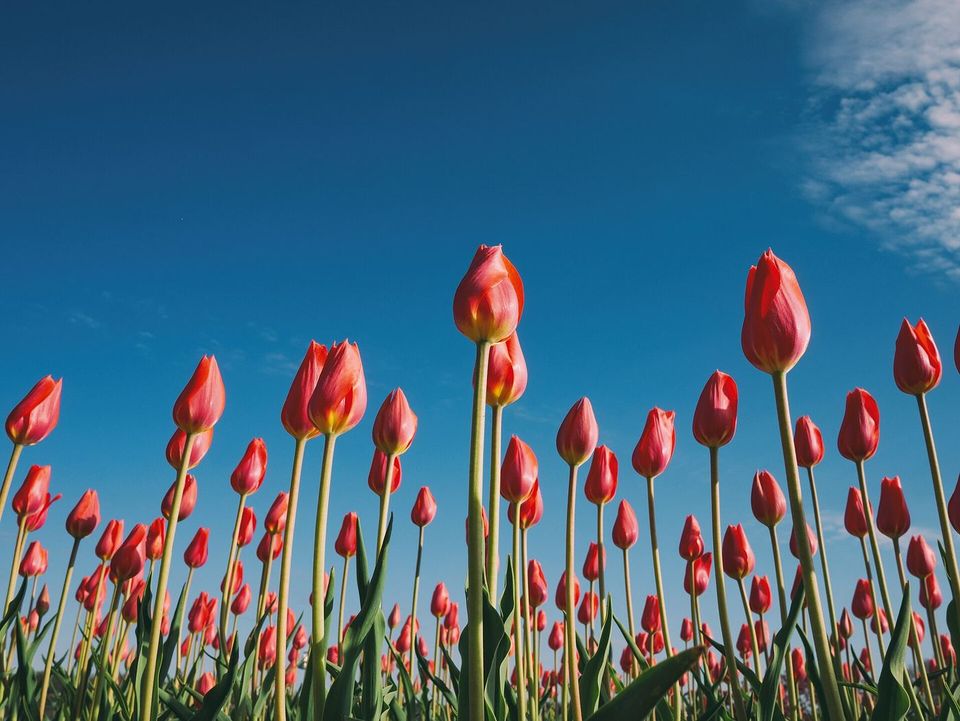
World Bee Day is on 20 May. To celebrate, see a garden the way a western honey bee does: drag the line across the tulips, or add a photo of your own garden. Bees see ultraviolet too, a colour no photo can hold, so we explain that part in words.

Your garden, bee eyes
Your photo is never uploaded: everything happens in this browser.
A simulation made from published eye studies. Not what the animal feels.
The colour you cannot see
- A western honey bee sees ultraviolet, a colour you can't see at all.
- Many flowers carry ultraviolet patterns you can't see. A western honey bee can.
- Two flowers that look the same white to you can look different to a western honey bee.
- The rainbow of a western honey bee goes on past violet, into colours you have no name for.
Cameras and screens are made for your eyes, so a photo holds no ultraviolet at all. The picture above shows the bee's other colours; the ultraviolet part, like the patterns on many petals, only a bee could show you.
More about bee eyes
- A western honey bee sees about 255 times less detail than you.
- Fast things look about 3.7 times slower to a western honey bee.
About the day
The United Nations named 20 May World Bee Day (FAO: World Bee Day). See Like Animals is not connected with the organisers.
When is World Bee Day?
Every year on 20 May, as named by the United Nations.
What colours can bees see?
A western honey bee sees ultraviolet, a colour you can't see at all.
Why can't the picture show ultraviolet?
A camera does not record it and a screen cannot show it, so no picture can. That is why this page tells you about it instead.
The science behind it: the numbers and studies for the western honey bee